



What Is a Gold IRA?
A gold IRA is a type of self-directed IRA that allows an account holder to hold physical gold and other precious metals inside an individual retirement account. gold bullion ira gold based ira best gold IRA companies Unlike a regular IRA or many traditional investments that focus on paper assets such as mutual funds and stocks, a self-directed gold IRA can include physical assets like bullion coins, bullion bars, and certain platinum coins that meet minimum purity requirements established by the Internal Revenue Service.

In a gold backed IRA, you do not personally store or hold gold at home. Instead, your IRA custodian arranges secure depository storage for storing physical assets that belong to the IRA account. Gold IRAs follow the same core tax framework as traditional and Roth IRAs, but they add special operational rules about how to buy gold, what forms of physical metals are allowed, and how to keep those retirement assets in compliance.
Why Consider a Precious Metals IRA?
Portfolio Diversification and an Inflation Hedge
A gold IRA adds two things a stock-and-bond portfolio cannot: an inflation hedge and a non-correlated physical asset. Gold's 30-year correlation to the S&P 500 is roughly 0.0, which is why advisors typically recommend a 5–15% allocation for investors seeking inflation protection.

Gold's correlation to the S&P 500 from 1994–2024 was 0.01, and to 10-year Treasuries 0.11 (source: World Gold Council). During the 2008 financial crisis, gold rose 5.8% while the S&P 500 fell 37%, demonstrating how physical metals can buffer a retirement portfolio during equity drawdowns.
Potential Tax Advantages
From a tax perspective, a gold IRA account follows the same tax advantages as other individual retirement account types. With a traditional IRA structure, contributions may be deductible depending on your income and participation in an employer plan, and growth is tax deferred until distribution. With a Roth IRA structure, qualified withdrawals are tax free in retirement, though you fund the account with after-tax dollars. A SEP gold IRA can accept up to $70,000 per year for self-employed individuals — substantially more than the standard $7,000 limit. Always coordinate with a tax advisor for personalized tax advice.
How a Self Directed Gold IRA Works
Choose an IRA Custodian
Select a reputable IRA custodian that supports self-directed IRA accounts and the handling of physical metals. Compare providers on transparency, storage fees, management fees, and minimum investment requirements.
Fund the Account
Fund your gold backed IRA by making new contributions within contribution limits or by moving retirement funds from an existing IRA through a trustee-to-trustee transfer. Direct transfers between custodians minimize errors.
Select Approved Precious Metals
Choose IRS-eligible physical assets to purchase. Common choices include American Gold Eagles, American Silver Eagles, certain platinum coins, and gold bullion bars from approved refiners.
Arrange Secure Storage
Your self-directed IRA must use a qualified depository for storing physical assets. You cannot personally hold gold that belongs to the IRA; having direct control can be treated as a distribution.
Maintain Compliance
Stay within contribution limits, understand required minimum distributions for traditional accounts, and follow IRS rules on prohibited transactions. Keep accurate records and rely on your custodian's reporting.
Gold IRA Investments: What Can You Hold?
Bullion Coins and Bullion Bars
Most investors focus on bullion coins and bullion bars that satisfy IRS purity thresholds and are produced by accredited mints. The goal is to hold physical gold that closely tracks the spot price with minimal collectible markup. Keep your gold IRA investments centered on approved precious metals for clarity and liquidity.
Gold, Silver, Platinum, and Palladium
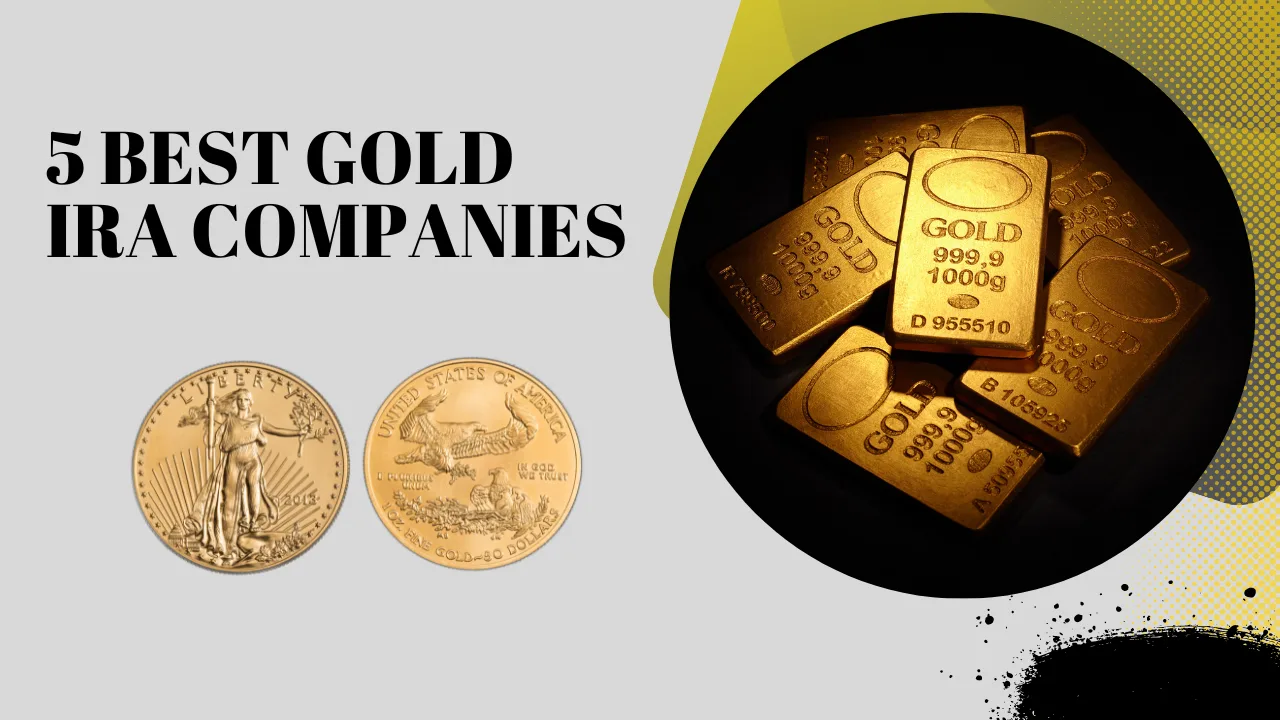
A precious metals IRA holds four IRS-approved metals: gold (.995 fineness minimum per IRC §408(m)), silver (.999), platinum (.9995), and palladium (.9995). Each metal must also be produced by an LBMA-approved or COMEX-approved refiner. IRA-eligible coins include the American Gold Eagle, American Gold Buffalo, Canadian Maple Leaf, and Austrian Philharmonic — but not the South African Krugerrand, which does not meet the .995 fineness threshold.
Physical Precious Metals vs Paper Assets
In a gold backed IRA, you own physical assets stored in a qualified depository, not paper assets that mimic gold prices. A regular IRA holds paper gold assets such as ETFs (GLD, IAU) and mining stocks — a gold backed IRA holds the metal itself. Physical metals entail storage fees ($100–$300/year) but provide the direct ownership some investors prefer, especially during periods of counterparty or systemic risk.

Costs, Fees, and Minimum Investment Requirements
Before opening a gold IRA account, compare the full cost picture. Total annual costs typically run $200–$500: setup fees of $50–$150, custodian administration fees of $80–$300/year, and depository storage of $100–$300/year. When you buy or sell metal, expect a bid/ask spread of 3–8% above spot price. Named depositories used by most custodians include Delaware Depository, Brinks Salt Lake City, and IDS Texas — ask whether your metals are held in segregated storage (your metals only) or commingled storage (pooled with other clients' holdings). Always request written, itemized pricing and minimum investment requirements before committing.
Risks and Considerations
✓ Potential Benefits
- Portfolio diversification beyond paper assets
- Potential inflation hedge
- Tax advantages (traditional or Roth)
- Physical asset ownership
- Long-term store of value
✗ Key Risks
- Gold price volatility
- No dividends or interest
- Storage and insurance costs
- Higher fees than paper assets
- Strict IRS compliance rules
Gold IRA investing carries quantifiable risks. Gold pays no dividends or interest — stocks yielded ~1.5% and bonds ~4.5% in 2025. Gold also suffered a 45% drawdown between 2011 and 2015, demonstrating it is not a low-volatility asset. Operationally, you must follow IRS rules carefully; prohibited transactions under IRC §4975, taking personal possession of IRA metals (home storage), or dealing with a disqualified person can result in the IRA being treated as fully distributed, triggering immediate income tax plus the 10% early withdrawal penalty.
What Is the Downside of a Gold IRA?
The three biggest downsides are cost, liquidity, and income drag. Gold IRAs charge $200–$500 in annual fees versus $0–$50 for a standard brokerage IRA. Gold pays no dividends or interest. Selling physical metal requires liquidating through your custodian at a bid/ask spread of 3–8% above the spot price benchmark. Prolonged drawdowns happen: gold lost 45% between 2011 and 2015. And unlike a brokerage account, you cannot sell gold holdings in minutes — the in-kind distribution or liquidation process takes days.
Home storage is also explicitly prohibited. The IRS considers taking personal possession of IRA-held metals a taxable distribution. Several promoters have marketed "home storage gold IRA" arrangements, but the IRS has consistently ruled these constitute prohibited transactions under §4975 and IRC §408(m), triggering full tax liability plus a 10% early withdrawal penalty.
What If You Invested $1,000 (or $10,000) in Gold?
Historical gold performance scenarios (inflation-adjusted, based on London PM fix):
| Investment | 10 Years Ago (Apr 2016, ~$1,230/oz) | 20 Years Ago (Apr 2006, ~$600/oz) |
|---|---|---|
| $1,000 | ~$2,760 (+176%) | ~$5,700 (+470%) |
| $10,000 | ~$27,600 (+176%) | ~$57,000 (+470%) |
Based on gold at approximately $3,400/oz in April 2026. Past performance does not guarantee future results. The S&P 500 (with dividends reinvested) returned approximately 350% over the same 20-year period, illustrating that gold and equities can both perform strongly but over different economic cycles.
Gold IRA Contribution Limits (2025 & 2026)
The 2025 contribution limit is $7,000 per year ($8,000 if you are age 50 or older) — the same as a standard IRA. SEP gold IRAs, available to self-employed individuals and small business owners, allow up to $70,000 (2025), making them a significantly more powerful vehicle for high earners.
| Account Type | 2025 Limit | Catch-Up (Age 50+) |
|---|---|---|
| Traditional / Roth Gold IRA | $7,000 | $8,000 |
| SEP Gold IRA | Up to $70,000 | No catch-up |
RMDs (required minimum distributions) begin at age 73 for traditional gold IRAs. Because your IRA holds physical metal, distributions can be taken as an in-kind distribution (you receive the actual coins/bars) or as cash after the custodian liquidates metal at the current spot price. Roth gold IRAs have no RMDs during the owner's lifetime.
Taxes, Contributions, and Distributions
Your gold IRA follows the same tax framework as other individual retirement accounts. With a traditional IRA, contributions may be deductible, growth is tax deferred, and you pay taxes upon withdrawal at ordinary income rates. RMDs begin at age 73 — if your account holds physical metals, plan ahead for how you will meet distributions. With a Roth IRA, qualified withdrawals can be tax free when you meet holding period and age rules. Early withdrawals (before age 59½) trigger a 10% early withdrawal penalty plus income tax. Keep detailed records and consult a tax advisor for guidance on collectibles rules under IRC §408(m) and prohibited transactions under IRC §4975.
Transfers, Rollovers, and Using an Existing IRA
A trustee-to-trustee transfer avoids the 60-day rollover rule and the one-rollover-per-12-months rule that trip up direct rollovers. Many investors fund a gold backed IRA by moving money from an existing IRA or 401(k) via direct transfer — the custodian handles the paperwork and no funds are distributed to you personally. If you use a 60-day rollover instead, you must redeposit 100% of the gross distribution within 60 days or the undistributed amount becomes taxable income plus potentially a 10% early withdrawal penalty. You are also limited to one 60-day rollover per 12-month period across all your IRAs.
Choosing Gold IRA Companies and an IRA Custodian
When selecting gold IRA companies and an IRA custodian, focus on reputation, regulatory awareness, and clear disclosures. Review Better Business Bureau ratings, customer experiences, and the quality of educational materials. Prefer firms that encourage you to seek independent tax advice and discuss risks openly rather than pushing hard-sell tactics.

Special Offer from Augusta Precious Metals
Compare Rates
Compare Rates →✓ No obligation ✓ 100% Free ✓ Ships in 24-48h
Gold IRA vs Physical Gold vs Gold ETF
| Feature | Gold IRA | Physical Gold | Gold ETF (GLD/IAU) |
|---|---|---|---|
| Tax Treatment | Tax-deferred / Roth tax-free | Collectibles rate (28% max) | Collectibles rate (28% max) or long-term capital gains |
| Annual Fees | $200–$500 | Storage/insurance variable | 0.25–0.40% expense ratio |
| Direct Metal Ownership | Yes (in depository) | Yes (you hold it) | No (fund holds metal) |
| Liquidity | Days (custodian liquidation) | Varies (dealer) | Instant (exchange-traded) |
A gold backed IRA complements a traditional portfolio by introducing physical assets that have historically shown different performance drivers than the stock market. Investors who prioritize tax deferral and direct metal ownership typically favor gold IRAs; those who prioritize low fees and instant liquidity may prefer gold ETFs inside a brokerage account.
Who Might Consider a Self Directed Gold IRA?
A self-directed IRA that holds gold may suit investors who want to hold physical gold as a hedge against inflation, are comfortable with potentially higher fees in exchange for tangible assets, and value diversification benefits. It may be less suitable for investors seeking current income, or for those who prefer the simplicity of index funds.
Practical Tips Before You Buy Gold in an IRA
- Confirm eligibility: Ensure every item you purchase is on the list of approved precious metals and meets minimum purity requirements.
- Use reputable channels: Work with an IRA custodian and dealers who provide full invoices and straightforward pricing.
- Verify fees: Request a written schedule of storage fees, management fees, annual fees, shipping, and spreads.
- Avoid collectibles: The IRS excludes numismatic and rare coins from precious metals IRAs under IRC §408(m)(3). Only bullion coins and bars meeting minimum fineness requirements qualify.
- Secure storage only: Do not personally store IRA metals. Storing physical assets at home can lead to taxes and penalties.
- Plan distributions: Consider how you will meet required minimum distributions when your account holds physical metals.
- Stay informed:The information on this site is offered as a general educational resource about gold IRA products and should not be used as the sole basis for any financial decision. Precious metals markets can be volatile, and loss of principal is a real possibility. Consult a licensed IRA specialist or tax professional to understand how these products apply to your situation.